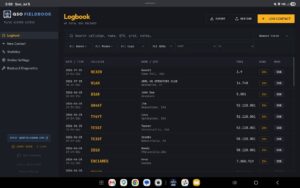
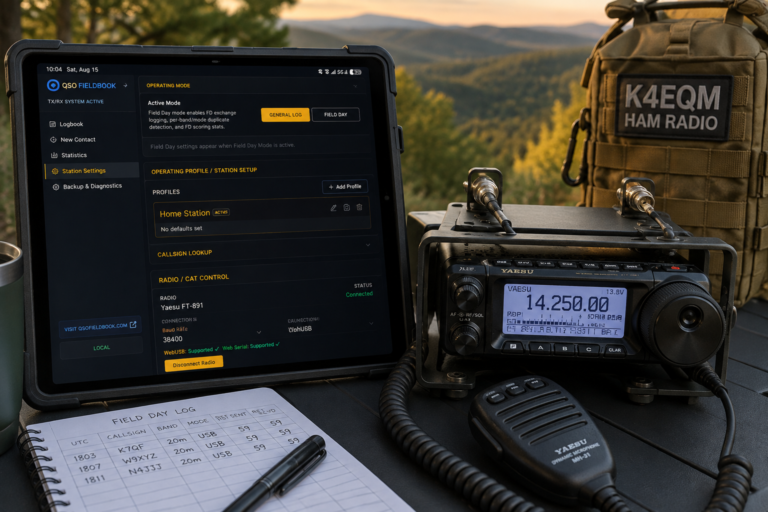
QSO Fieldbook CAT control connected to a Yaesu FT-891 on an Android tablet
QSO Update

QSO Fieldbook CAT Control for the Yaesu FT-891

Blog

QSO Fieldbook CAT control is something I’ve wanted to experiment with for a while, and over the last couple of days I finally decided to see how far I could take it. It started with a pretty simple question: could I plug my Yaesu FT-891 into my tablet over USB and have QSO Fieldbook automatically read the frequency?

The answer, after quite a bit of trial and error, is yes.

And it ended up becoming a lot more capable than just reading the frequency.

QSO Fieldbook CAT Control Now Works With the FT-891

The first radio supported by QSO Fieldbook is the Yaesu FT-891.

When the radio is connected, QSO Fieldbook can now read the current frequency and operating mode directly from the radio. From there, the app also figures out the band automatically.

So if I’m sitting on 14.250 MHz in USB, QSO Fieldbook already knows I’m on 20 meters and can fill that information into the New Contact form for me.

As I turn the VFO, the frequency in QSO Fieldbook follows along.

If I change bands, it follows that too.

If I switch modes, the mode in the log changes with the radio.

It sounds like a small thing, but when you’re actually operating, it makes the logging process feel a lot more natural.

Instead of entering information the radio already knows, I can focus on the contact.

CAT Control Without Giving Up Manual Logging

One thing I did not want was for CAT control to become a requirement.

QSO Fieldbook is still completely usable without a radio connected.

If I unplug the radio, turn it off, or just don’t want to use CAT, I can enter everything manually exactly like before.

There’s also a little bit of intelligence built into the New Contact form.

If the radio is connected and I manually change the frequency, band, or mode for a particular contact, QSO Fieldbook won’t immediately overwrite what I typed the next time it polls the radio.

There’s also a Sync From Radio button if I want to pull the current radio settings back into the form.

Once the QSO is saved, the next contact can go right back to following the radio.

That balance was important to me. The radio should help with logging, not take control of it.

Getting QSO Fieldbook CAT Control Working on Android

This part ended up being the rabbit hole.

My main portable device is an Android tablet running Android 16. My first thought was to use Web Serial because QSO Fieldbook is primarily a web app and PWA.

The basic CAT system worked, but Android 16 would not expose the FT-891’s USB serial interface to Chrome the way I needed it to.

So instead of giving up on the tablet, I went another direction.

I added a native Android USB connection to QSO Fieldbook.

The Android version can now talk directly to the radio through Android’s USB Host system. The radio connects to the tablet through a USB hub, and QSO Fieldbook sees the FT-891’s Silicon Labs CP2105 USB interface directly.

That also gave me a chance to see exactly what the FT-891 presents over USB.

It exposes two interfaces:

  • Enhanced COM Port — used for CAT control
  • Standard COM Port — used for things like PTT and transmit control

QSO Fieldbook only uses the Enhanced CAT interface.

I intentionally left the transmit-control side alone. Right now the goal is simple: let the logger read what the radio is doing.

Then I Wanted the PWA to Work Too

Once the Android app was working, I still wasn’t completely satisfied.

One of the things I like about QSO Fieldbook is that it can just be opened in a browser or installed as a PWA. I didn’t really want QSO Fieldbook CAT control to mean everyone suddenly needed a traditional Android app.

So I went back after the browser side again.

The solution ended up being WebUSB.

Instead of asking Android to expose the FT-891 as a traditional serial port, QSO Fieldbook can connect directly to the radio’s USB interface from Chrome.

And that worked.

So at this point, on my tablet, I can use the FT-891 with QSO Fieldbook three different ways:

  • The native Android app
  • The installed PWA
  • QSO Fieldbook opened normally in Chrome

All three can read the radio.

That was probably the part of this update I was happiest to get working.

A Small FT-891 Setting That Caused a Big Headache

There was one FT-891 setting that had me scratching my head for a while.

The USB connection was working. QSO Fieldbook could see the radio. It could identify the correct CAT port. Everything looked like it should be working.

But I wasn’t getting frequency data.

The culprit ended up being CAT RTS.

My radio had CAT RTS enabled, while QSO Fieldbook was intentionally leaving RTS off.

Once I changed:

CAT RTS: Disabled

the frequency immediately started coming through.

My current working FT-891 setup is:

CAT Rate: 38400
CAT RTS: Disabled

Sometimes the fix really is one menu setting.

What QSO Fieldbook CAT Control Feels Like in the Field

This is really the part that matters.

I can set the tablet next to the FT-891, connect one USB cable, open QSO Fieldbook and start operating.

If I tune from one frequency to another, the logger follows me.

If I change modes, the logger follows me.

When I open a new QSO, frequency, band and mode can already be filled in.

I type the callsign and the actual contact information instead of repeatedly entering details that are already available from the radio.

That’s much closer to how I pictured QSO Fieldbook working when I started building it.

One CAT System Across Multiple Platforms

I also didn’t want to build three separate versions of the CAT system.

The FT-891 logic is shared.

The frequency parsing is shared.

The mode handling is shared.

The logging behavior is shared.

The difference is simply how QSO Fieldbook reaches the radio.

The Android app can use native USB.

The PWA and normal Chrome version can use WebUSB.

On platforms where traditional Web Serial works well, that option is still there too.

That should make it much easier to support more radios later without tearing apart the logging side of the app every time.

What’s Next for QSO Fieldbook?

For the moment, I’m actually trying not to add much more to CAT.

It works.

Now I want to use it.

There are some things that only real operating time is going to tell me, like how it behaves during a long session, what happens after the tablet sleeps and wakes back up, how reconnecting USB feels in normal use, and whether there are little workflow annoyances that don’t show up during development.

The FT-891 is the first radio supported, but the system was built with additional radios in mind.

I’m sure that will come later.

For now, though, I’m pretty happy with where this landed.

A couple of days ago I was wondering whether QSO Fieldbook could simply read the frequency from my radio.

Now I can plug the FT-891 into my Android tablet, open QSO Fieldbook in the app, PWA, or browser, and have the log follow along with the radio.

That feels like a pretty big step forward for the project.

If you want to follow along as QSO Fieldbook continues to develop, you can find the latest work on the QSO Fieldbook Updates page.

QSO Fieldbook is still under active development and testing, and there’s plenty more I want to do with it.
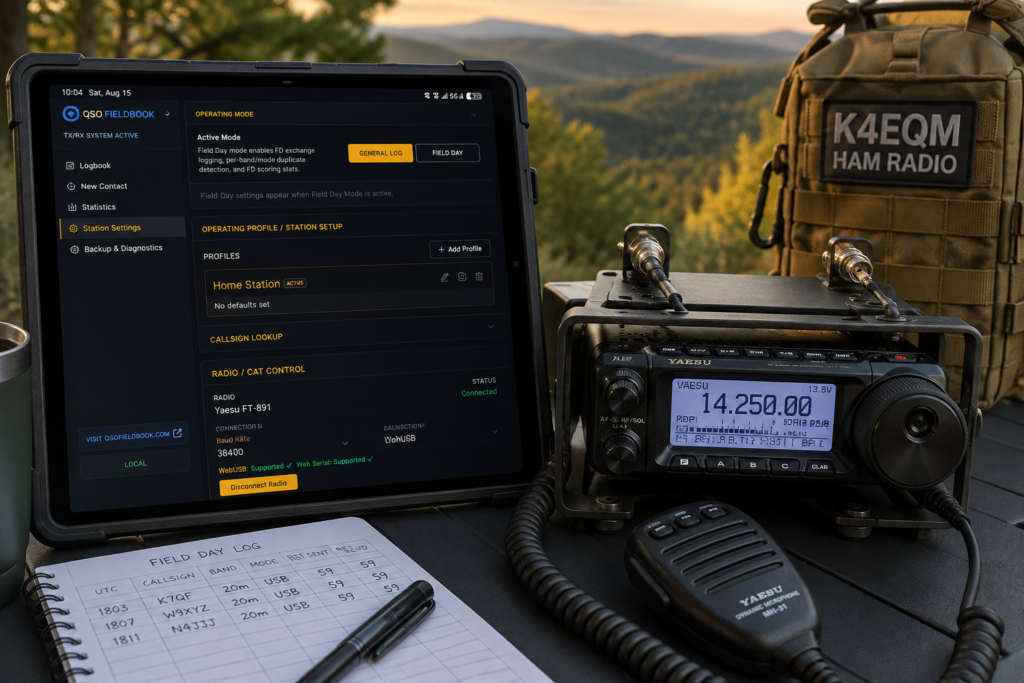
QSO Fieldbook CAT control connected to a Yaesu FT-891 on an Android tablet

QSO Update

QSO Fieldbook: A Ham Radio Logging App Built for Real Operators

Updates

QSO Fieldbook: A Ham Radio Logging App Built for Real Operators

QSO Fieldbook grew out of a simple problem: logging contacts should be easy when you are actually on the air. Many amateur radio tools work well at a desk, but field operators need something faster, cleaner, and easier to use on a phone or tablet.

Because of that, we started building a practical ham radio logging app that fits real operating conditions. The goal is simple: open the app, log the contact, protect the data, and get back to radio.

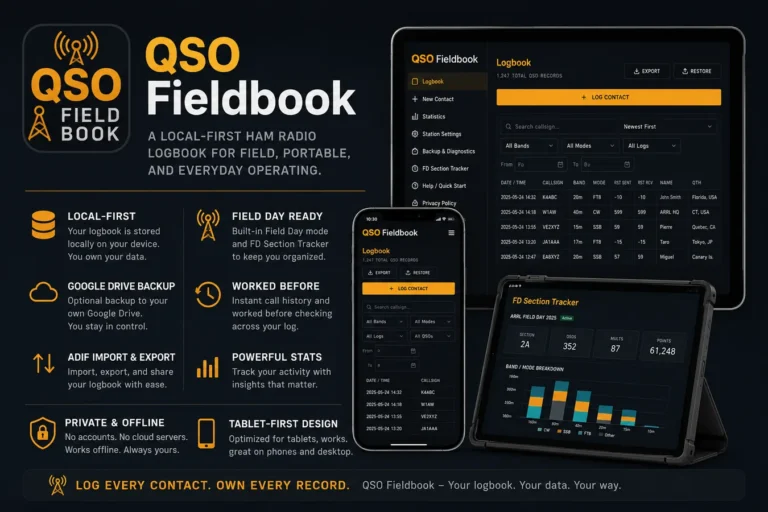
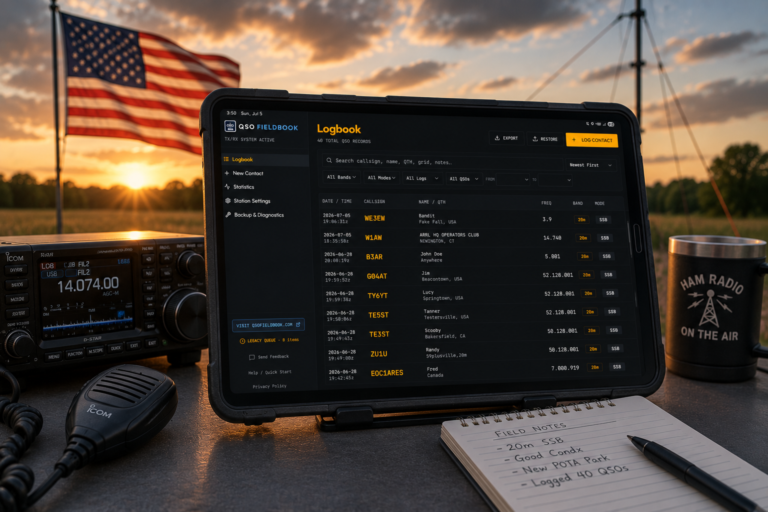
QSO Fieldbook ham radio logging app screenshot
A clean logging screen helps operators focus on the contact instead of fighting the tool.

Why We Made It

Ham radio does not always happen in a perfect shack. Sometimes you operate from a park, a club event, a temporary antenna setup, a vehicle, or a busy Field Day table. In those moments, the logging tool should help instead of getting in the way.

We made QSO Fieldbook for operators who want a lighter workflow. Instead of designing around a large desktop screen first, we focus on mobile use, quick entry, simple navigation, and dependable records. As a result, the app can better support the way many hams actually operate.

Built for Local Logging

A log app should not fall apart when the internet connection gets weak. Therefore, the project uses a local-first approach. The app stores contact data on the device first, so operators can keep logging even when they do not have a steady connection.

That choice matters in the field. It also gives the operator more control. Backups still matter, of course, but the normal logging experience should not depend on a server being available every time someone makes a contact.

QSO Fieldbook Development Status

QSO Fieldbook remains under active development and testing. We continue to test the core logging flow, mobile layout, backup behavior, restore tools, field features, and export options. Each round of testing helps us find rough spots and improve the app before wider use.

Right now, the focus is stability and trust. We want the app to handle normal logging, portable operation, and recovery tasks with confidence. In addition, we are checking how it behaves as a progressive web app, including install behavior, updates, offline use, and device storage.

Current Features in Testing

The current test build includes several important pieces. Operators can use the general log, manage station details, work with operating profiles, and test field-focused tools. The app also includes support for backup and restore workflows, along with common export formats.

  • Local-first contact logging
  • Mobile and tablet-friendly screens
  • Progressive web app install behavior
  • Google Drive backup and restore testing
  • JSON backup and restore tools
  • ADIF import and export
  • CSV export
  • Field Day tools
  • Section tracking
  • Worked-before tools
  • Operating profiles
  • Statistics

Why Data Portability Matters

Your log belongs to you. For that reason, we do not want the app to lock operators into one fragile workflow. Import, export, backup, and restore tools all play an important role in the project.

ADIF support matters because many amateur radio operators already use other logging systems, award tools, and confirmation services. CSV export also helps operators review, sort, or archive their information in other tools. Meanwhile, backup options help protect the log after a long day of operating.

Field logging needs to work in real operating conditions, even when the setup is temporary.

Made for Real-World Testing

We are not treating this as a finished product yet. Instead, we are testing it in the open, improving the layout, watching for bugs, and checking the features that matter most. That process takes time; however, it also makes the final app stronger.

As testing continues, we expect the app to keep improving. Some features may change. Some screens may move. New tools may appear as we learn what operators need most. The main purpose will stay the same: make contact logging easier in the places where radio actually happens.

Follow the Project

QSO Fieldbook exists because amateur radio logging should feel simple, portable, and dependable. The project has already come a long way, and it continues to move forward through active development and testing.

You can follow future updates in our project updates, review the privacy policy, or check back as we continue refining the app. If you care about clean logging, field operation, and keeping control of your radio data, this project is worth watching.

For more information about digital amateur radio logging and log confirmation, the ARRL Logbook of The World is a helpful outside resource.


Ham radio logging software running on a tablet during portable radio operation
QSO Update

Ham Radio Logging Software for Portable Operators

Amateur Radio

Ham Radio Logging Software for Portable Operators

Ham radio logging software has become an important part of modern amateur radio. Whether you are operating from home, a park, a campsite, or a remote field location, keeping an accurate record of your contacts matters. A good log helps you track call signs, signal reports, frequencies, modes, locations, and notes from each contact.

For many operators, logging is no longer limited to a desktop computer in the shack. Portable radio has grown quickly, and more hams are taking their gear outdoors for casual operating, emergency practice, Parks on the Air, field days, and other activities. That shift has created a real need for simple, reliable tools that work well away from the desk.

The Need for Portable Logging Tools

When you are operating outside, speed and simplicity matter. You may be balancing a radio, antenna, battery pack, notebook, and changing weather conditions all at the same time. The last thing you need is a slow or complicated logging process.

A tablet-friendly logging app gives operators the flexibility to record contacts from almost anywhere. It should be easy to read in the field, quick to enter data into, and dependable even when an internet connection is not available. Offline access is especially important for remote locations where cell service may be weak or completely unavailable.

If you follow our own field activity, you can also check out our latest QSO Field Book updates for more notes from the logbook.

What Makes a Good Field Logging App?

A strong field logging tool should be fast, lightweight, and focused. Operators should be able to enter contacts quickly without fighting through unnecessary menus or heavy software. The goal is to capture the contact accurately while keeping attention on the radio.

Control over your own data is another major benefit. When your logs are stored in a way you can access, export, review, and back up, you are not locked into one system. Over time, that data can help you review operating habits, track performance, and better understand which bands, locations, or setups work best.

For anyone new to amateur radio, the ARRL overview of amateur radio is a helpful starting point.

Built for Operators on the Move

The best ham radio logging software should feel like part of the station, not a distraction from it. It should support fast contact entry, work well on a tablet, and remain useful whether you are connected to the internet or completely offline.

For seasoned operators, better logging can make field operations smoother and more organized. For newcomers, it can make the hobby easier to learn and more enjoyable. In either case, a reliable portable logbook helps turn every contact into useful, organized information.

As more operators take radio into the field, the demand for better ham radio logging software will only continue to grow.