QSO Fieldbook: A Ham Radio Logging App Built for Real Operators
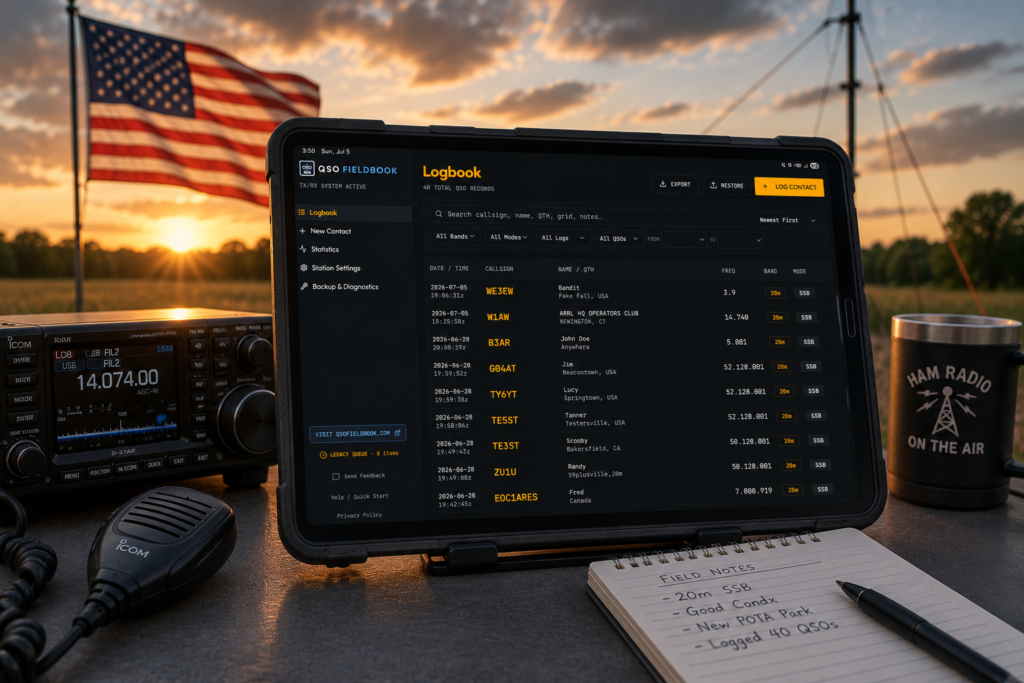
QSO Fieldbook grew out of a simple problem: logging contacts should be easy when you are actually on the air. Many amateur radio tools work well at a desk, but field operators need something faster, cleaner, and easier to use on a phone or tablet.
Because of that, we started building a practical ham radio logging app that fits real operating conditions. The goal is simple: open the app, log the contact, protect the data, and get back to radio.
Why We Made It
Ham radio does not always happen in a perfect shack. Sometimes you operate from a park, a club event, a temporary antenna setup, a vehicle, or a busy Field Day table. In those moments, the logging tool should help instead of getting in the way.
We made QSO Fieldbook for operators who want a lighter workflow. Instead of designing around a large desktop screen first, we focus on mobile use, quick entry, simple navigation, and dependable records. As a result, the app can better support the way many hams actually operate.
Built for Local Logging
A log app should not fall apart when the internet connection gets weak. Therefore, the project uses a local-first approach. The app stores contact data on the device first, so operators can keep logging even when they do not have a steady connection.
That choice matters in the field. It also gives the operator more control. Backups still matter, of course, but the normal logging experience should not depend on a server being available every time someone makes a contact.
QSO Fieldbook Development Status
QSO Fieldbook remains under active development and testing. We continue to test the core logging flow, mobile layout, backup behavior, restore tools, field features, and export options. Each round of testing helps us find rough spots and improve the app before wider use.
Right now, the focus is stability and trust. We want the app to handle normal logging, portable operation, and recovery tasks with confidence. In addition, we are checking how it behaves as a progressive web app, including install behavior, updates, offline use, and device storage.
Current Features in Testing
The current test build includes several important pieces. Operators can use the general log, manage station details, work with operating profiles, and test field-focused tools. The app also includes support for backup and restore workflows, along with common export formats.
- Local-first contact logging
- Mobile and tablet-friendly screens
- Progressive web app install behavior
- Google Drive backup and restore testing
- JSON backup and restore tools
- ADIF import and export
- CSV export
- Field Day tools
- Section tracking
- Worked-before tools
- Operating profiles
- Statistics
Why Data Portability Matters
Your log belongs to you. For that reason, we do not want the app to lock operators into one fragile workflow. Import, export, backup, and restore tools all play an important role in the project.
ADIF support matters because many amateur radio operators already use other logging systems, award tools, and confirmation services. CSV export also helps operators review, sort, or archive their information in other tools. Meanwhile, backup options help protect the log after a long day of operating.
Made for Real-World Testing
We are not treating this as a finished product yet. Instead, we are testing it in the open, improving the layout, watching for bugs, and checking the features that matter most. That process takes time; however, it also makes the final app stronger.
As testing continues, we expect the app to keep improving. Some features may change. Some screens may move. New tools may appear as we learn what operators need most. The main purpose will stay the same: make contact logging easier in the places where radio actually happens.
Follow the Project
QSO Fieldbook exists because amateur radio logging should feel simple, portable, and dependable. The project has already come a long way, and it continues to move forward through active development and testing.
You can follow future updates in our project updates, review the privacy policy, or check back as we continue refining the app. If you care about clean logging, field operation, and keeping control of your radio data, this project is worth watching.
For more information about digital amateur radio logging and log confirmation, the ARRL Logbook of The World is a helpful outside resource.